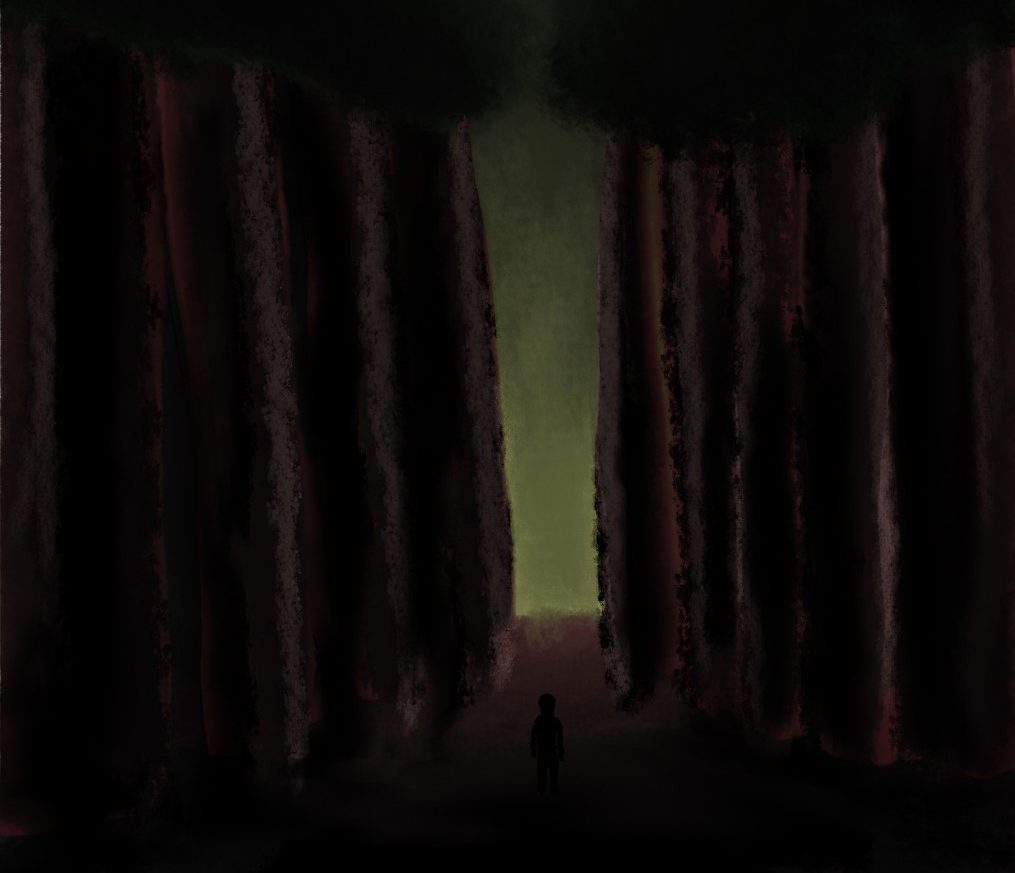

An image of a person walking through the woods at night. A light luminates towards the end of the path. This image symbolizes the feeling of uncertainty, confusion and anxiety that was felt.
By Melissa Smith
Hello, my name is Melissa, and my father was diagnosed with Frontotemporal Dementia (FTD) when I was young. I’ve painted the image above to represent what it felt like to experience this at a young age.
When I was eleven, he passed away, but a year prior he received his diagnosis. Since I was young, I didn’t fully understand what was going on. My father was a truck driver, so there’d be a few weeks where he’d be gone working. On days he was home my parents argued occasionally. At the time, none of us knew that it was due to his dementia, but it was progressing over the years. FTD can occur in anyone as young as 40 years old. Early signs of FTD may involve apathy, unwillingness to communicate, change in personality and mood. Along with lack of ambition or lack of social tact and obsessive and repetitive behavior. Once FTD advances memory loss becomes more prominent along with personality change.
At the time I felt confused and uncertain. My friends were considerate and kind, a good portion of my family came together since it was a difficult time. When he passed multiple family members were by his side. He was in a coma, due to his body shutting down. It lasted a couple days until he moved on. It has been eighteen years since he passed, and my feelings have changed. Now I look back on the memories that were shared and I’m glad I had that chance to spend time with him. I’ve gained a better understanding of what was happening and what FTD is. I hope some form of treatment will be found for it in the future. It’s a very difficult disease to experience, both for the person affected and their loved ones.
ways to help
As I’ve said before, part of my hope with this blog was to raise awareness and challenge people to think differently about some things. I hope highlighting FTD has done this. I think whenever it is possible, and most times it is, it’s important to provide the tangible ways in which we can love those around us and support our communities. Here are some ways and resources to help.
The Alzheimer’s Association is the main hub and provides resources to families and individuals living with Alzheimer’s. Support groups, day time care centers, education, volunteer opportunities, caregiving resources and more. Of course, you can always donate. Research and programs cost money. You can click on the link below for more information.
- Volunteer at a long term care facility, including their Memory Care Units
- Donate supplies needed for activities within the Memory Care Unit
- Take a meal to a family who is caregiving for a loved one
- Offer to pick up their groceries or ask if they need anything when you run to the store
- Provide gift cards for restaurants or places where they may get things like incontinent supplies or thickener for liquids (Walgreen’s, Rite Aid, Kroger etc).
If you have been in the role of a caregiver or lost a family member to any form of Alzheimer’s or Dementia, please leave a comment of what was the most helpful to you on that journey. Thanks for reading!
 standing with hope
Leave a comment