by molly klima
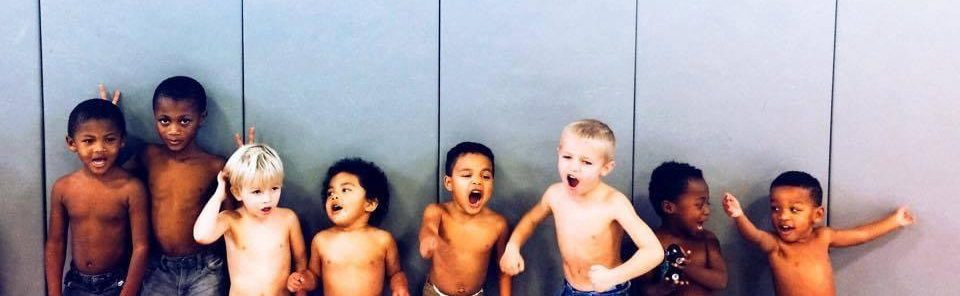
From the backseat, our five year old son asked, “Hey mom, do you think people think our family looks weird?” I thought for a moment, knowing some people probably do, then replied, “Maybe. But I think we look like a hot fudge sundae. We have vanilla, chocolate and caramel-and that’s a pretty good combo!” He laughed in agreement.
Or how about the time I learned a teammate asked my child for the “N pass.” If you’ve never heard this term allow me to enlighten you. The “N pass” is where Black students are asked by white students if they can call them the N word. Some times this comes with an ultimatum of “we can only be friends if you give me the N pass.” -ca. 2023
“Could I have a different waiter please, like maybe someone who is white?”, asked the patron in the next booth over. -ca. 2017
“You don’t have to worry. We don’t allow any ‘coons up here.” the property manager informed my dad as he handed my father the keys to our chalet in the Smoky Mountains. -ca. 1995 And no, he wasn’t talking about raccoons, otherwise my reserved father wouldn’t have given me a quick lecture on our way back across the parking lot about judging people or treating people differently based on the color of their skin. I was young but I could read the room before my dad even explained it to me.
These are just a few of the examples that flash through my mind when I hear someone say, “Racism would go away if we stopped talking about it.” Or “I don’t see color.” I could go on and on about our own personal experiences with our kids and family, or about my friends’ experiences.
I have to chuckle a little bit because as color blind as some folks claim to be, they only seem to identify someone’s race in a story if the person they are talking about is not white. It’s never: “Then this white guy pulled up too close to my car.” or “The white clerk was very kind.” They are only identified by race if they are a minority. Moving on.
beautiful design
In the summer of 2020, I took an evening drive to my grandparents farm. My grandma and I sat under the big Maple tree in her back yard. Lounging in plastic lawn chairs under the full branches and dark red leaves to hide from the hot sun, I simply admitted that my brain was a mess. She poured out her wisdom to me and I pulled out my phone to take notes. One thing she said that I didn’t write down but often think on is this: you can’t make everybody think like you. No matter how hard you try. If you can’t say amen, say ouch!
So while that may have been my attempt 4 years ago, it is not my attempt now. Before I go any farther, let me put you at ease and assure you I am not a Marxist or a socialist. I don’t think CRT is gospel and I don’t think my kids are automatically damned because they are Black and Brown. The conversation around race and racism has grown increasingly hostile over the past 10 years or so with all those terms I’ve mentioned. It seems safer and more convenient to let this topic lay. This is particularly easy if it hasn’t affected you or ever really impacted your life. We are human and it’s our nature to not pay much attention or give much thought to issues that we or the people we love don’t experience. Compassion can be hard to grasp when our only exposure is the media, movies and music. It’s impossible for us to know everything about everything, nor are we meant to.
So while I can appreciate “colorblindness theory” at face value with the assumption it comes from a place of “I treat everyone the same no matter their skin color”, this blindness, in my opinion, doesn’t serve anyone. I’m not sure if this is unique to America, but color blindness seems to only apply here. Traveling to other parts of the world or going on mission trips to third world countires often seems to leave Americans in awe of two things: 1) how people living in such desperation and poverty can find so much joy in Jesus and 2) the beautiful aspects of their culture.
I could be wrong, but it’s hard for me to believe that in God’s great design of humankind, that His intention was for the diversity He designed and allowed to be, was for it to all be ignored. Erased. Taboo. We don’t need to deny differences in ethnicity and culture or race. The Bible is clear about that. Yes, the Bible talks about us all being one family. That the Gospel of Jesus is for all people. Accepting the Gospel allows to be part of the family of God regardless of being a Jew, Gentile, slave or free, male or female. (Galatians 3:28)
Paul is not letting us off the hook that we would not see each other. He’s reminding us that we are no longer bound to the Law (Galatains 3:24-25)
molly klima
In Revelation 7:9 it says that John, “saw a vast crowd, too great to count, from every nation and tribe and people and language, standing in front of the throne and before the Lamb…” All peoples are represented there, distinguished. We don’t need to try to act like we are all the same or one culture must be more dominant than the other. Are we equal in God’s eyes? Yes. Does He see our differences? Yes.
And isn’t this a beautiful thing, that we would have a way amongst our brothers and sisters in Christ, that regardless of race or background, we can have common ground? I spent the first five years or my career dedicated to the unhoused and all the hell that causes it. I was the minority in the workforce. During one of my last days there, as I was debriefing with our CEO, we laughed about how I was the “whitest thing since sliced bread” but it somehow all worked out. I didn’t have to change who I was. I didn’t ask any of my co-workers or directors or subordinates to change who they were. My upbringing on a farm in an all white town is different than my friends who are Black and grew up in the city. There is a different culture in those two settings, regardless of race.
But isn’t it great, that despite all the differences in the details of our lives, that we can link arms to serve Christ together, not becuase of who we are, but because of who He is?
molly klima
can you see
As a mom thinking about our three sons, here are some of my candid thoughts. If you don’t see my kids for all they are, will you see their pain? If they are with you and we are not around, do you see them enough to see any potential danger, physical or emotional, they could walk into? Are your metaphorical blinders on, or are you prepared to address an issue of someone making a joke, touching their hair or maybe even pointing out how they “don’t talk Black.” If my children grow up to have the experiences that our friends all share in regards to bigger societal systems, what would it take for you to believe them and would you know how to fight for them? And if you’d do it for them, don’t stop there. They would be the easy ones to stand behind or speak up for.
I want to extend caution regardless of what “side” you find yourself on: it’s all too easy to find a mouthpiece who spouts the message we want to hear. No matter our stance on any issue, we can find someone who will agree with us, which can be quite dangerous in this day and age. I often get asked I listen to on this topic or what have I read. I love to read. We are much better off actually reading books and listening to full conversations than sound bites and excerpts. The answer is: I do my best to try to read and learn from brothers and sisters in Christ who live this everyday and have studied this even beyond their personal experience. If you are curious about race and the American church: The Color of Compromise by Dr. Jemar Tisby is fantastic. You can find these folks on Instagram and (probably Facebook) or you know…Google:
Jackie Hill-Perry
Pastor Eric Mason
Reverend Essau McCauley
Latasha Morrison
Trillia Newbell
Dr. Jemar Tisby
I’ve also learned that actual conversations about issues such as these are typically best discussed over coffee and not the internet. I’m always down for coffee.
Blessings, my friends.
 standing with hope
Leave a comment